COSTER: Collision Snapshot Guided Time-Reversed Safety-Critical Scenario Generation
Highlights
The two videos illustrate how COSTER and several baseline methods modify ordinary driving scenarios to induce collisions.
For methods that perturb existing vehicles, such as SEAL and CAT, collision generation can become unrealistic when inappropriate surrounding vehicles are selected for perturbation. Furthermore, the use of simplified, scenario-agnostic adversarial objectives can lead to collisions that occur outside the drivable map, resulting in implausible behaviors.
Adv-BMT takes a step further by introducing adversarial vehicles into the scene. However, its sampling- and heuristic-based strategy often generates collisions that are not map-compliant, and the resulting trajectories are frequently unrealistic.
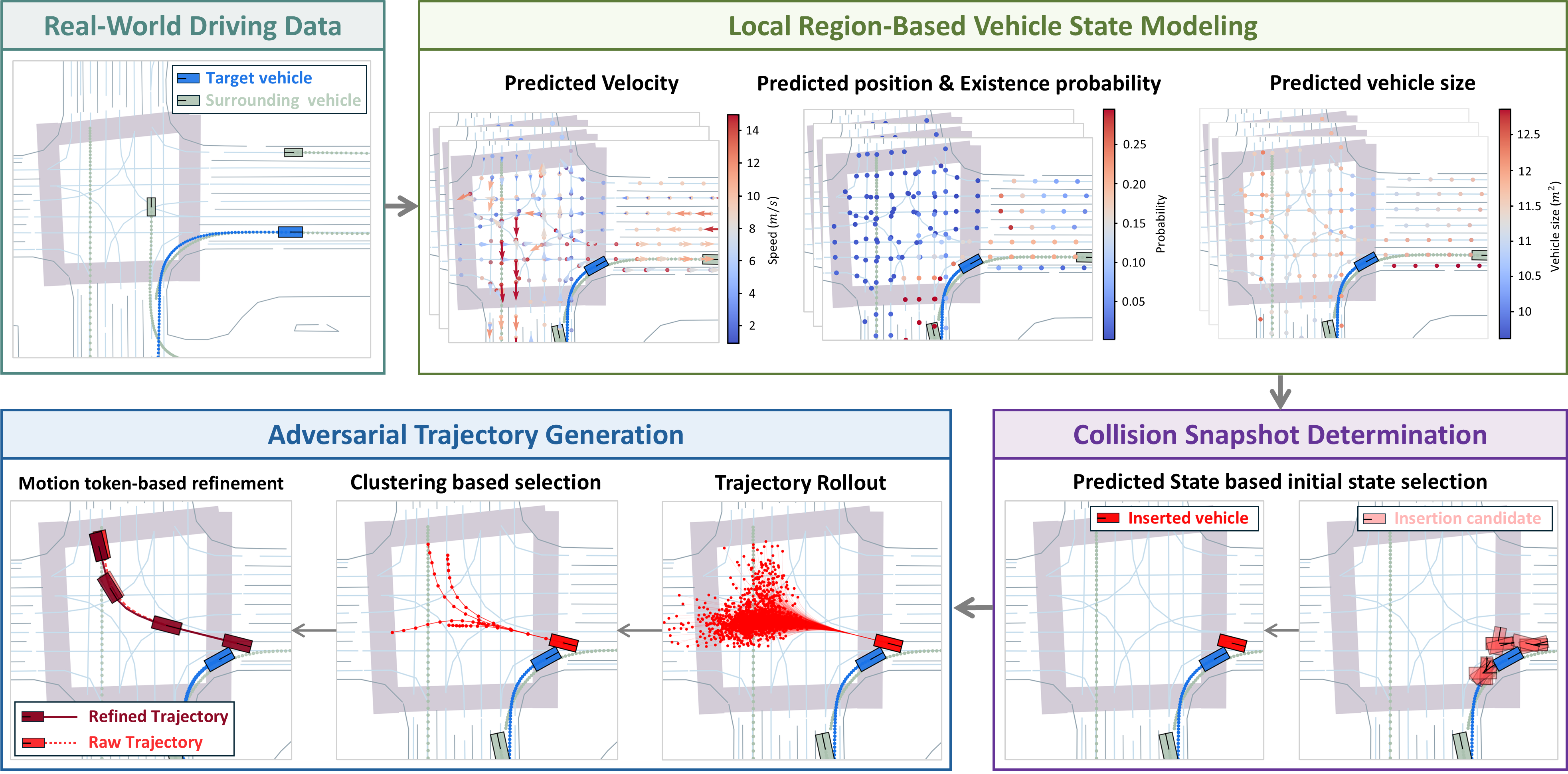
In contrast, COSTER incorporates scenario-specific context into collision generation through a learned traffic prior. By adapting to the unique characteristics of each scenario, COSTER produces plausible and multimodal collision trajectories. These realistic collision scenarios can be effectively leveraged for both the training and evaluation of autonomous driving systems.
Method
Collision time determination
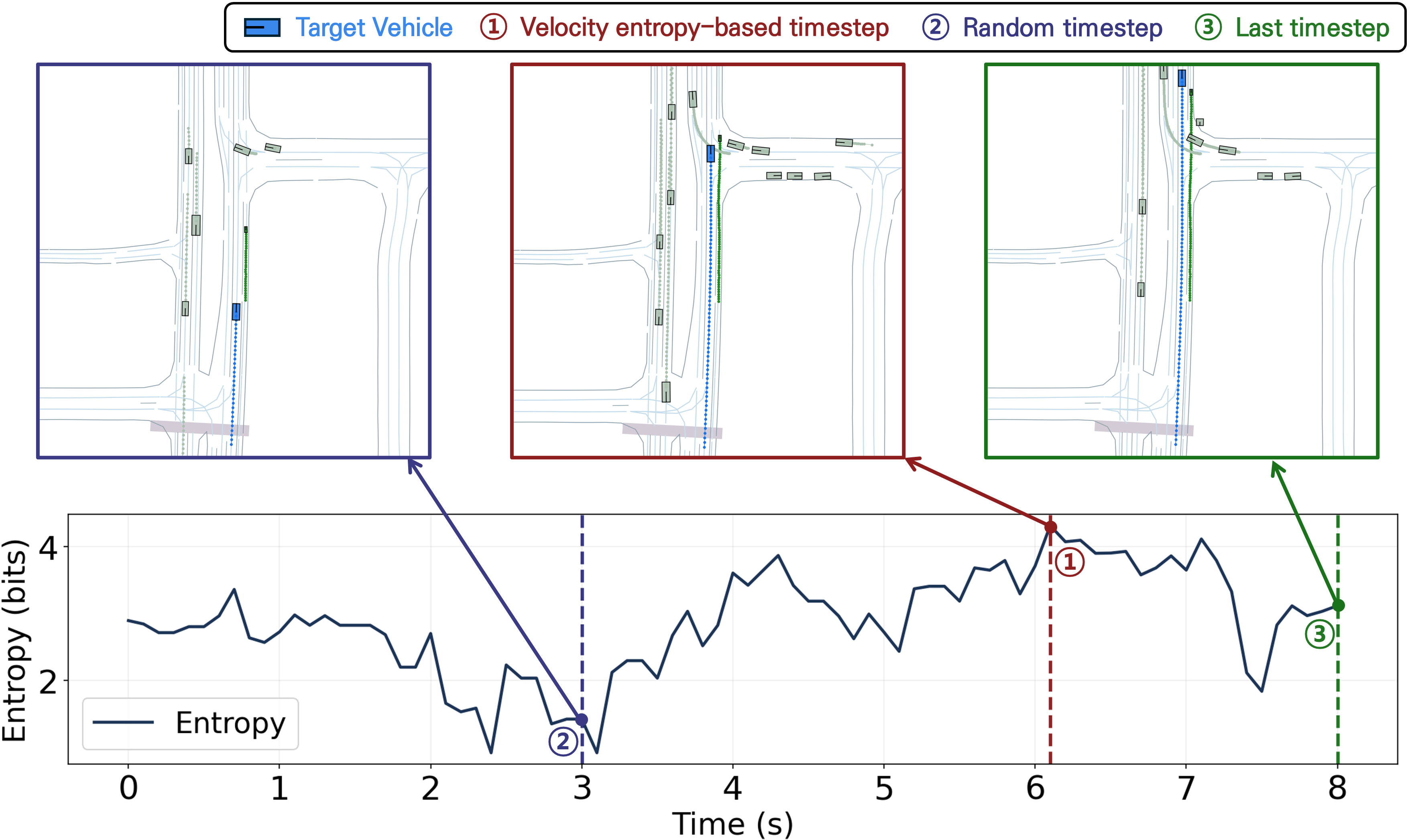
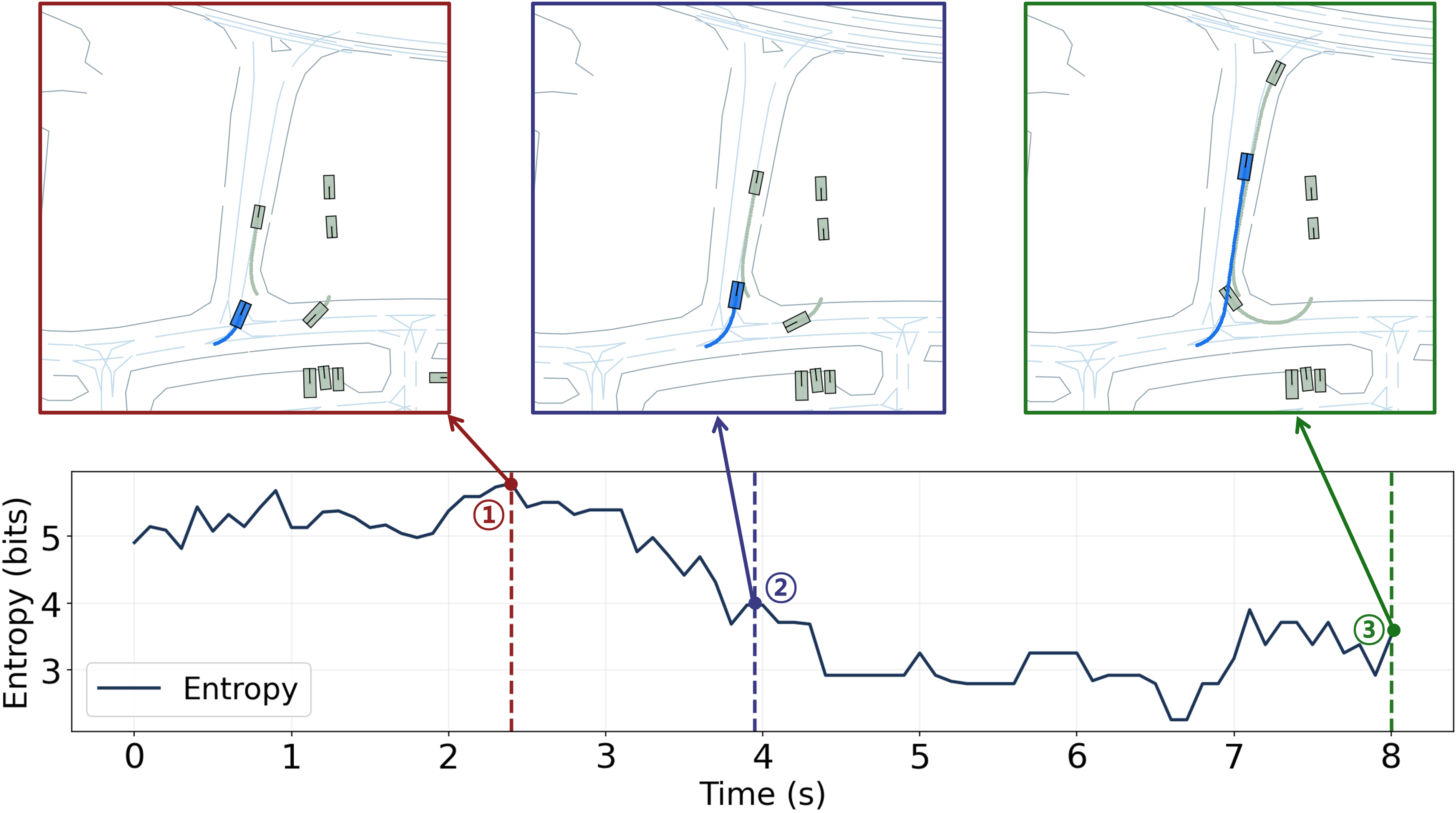
This figure demonstrates the advantages of selecting collision locations based on velocity entropy. Compared with randomly selecting a collision timestep or using the final timestep, the velocity entropy-based approach tends to identify locations where collisions are more plausible and where a greater diversity of collision scenarios can occur. This suggests that the method preferentially selects regions that are both behaviorally realistic and rich in interaction complexity.
Collision snapshot determination
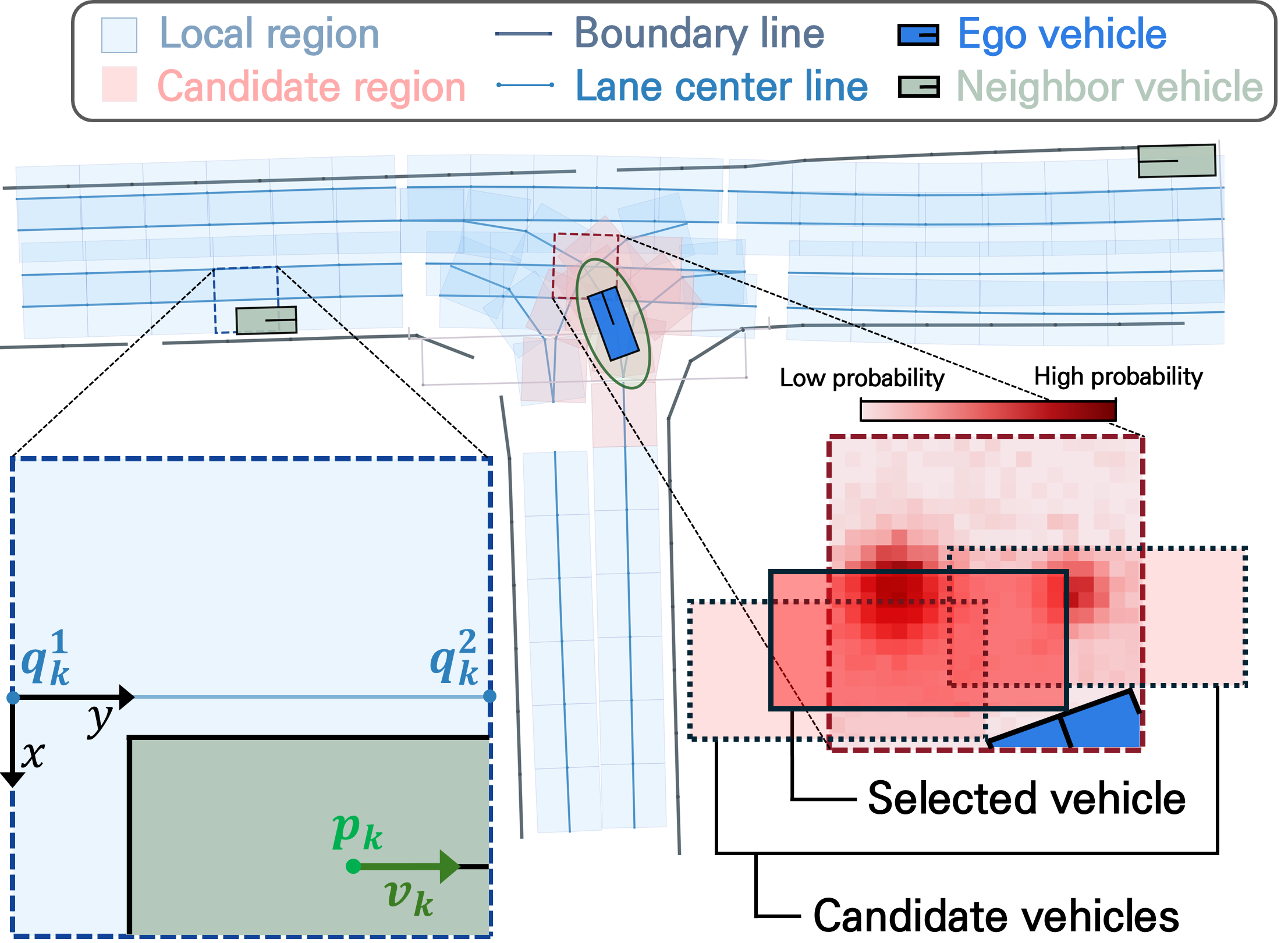
This figure illustrates the process of partitioning the map into local regions and determining the placement of a newly inserted adversarial vehicle with respect to the target vehicle. At a given collision timestep in the scenario, the local region with the highest velocity entropy among those overlapping the elliptical area centered on the target vehicle is selected. The adversarial vehicle in the collision snapshot is then initialized by sampling its position, velocity, and heading from the vehicle distribution within the selected local region.
Time-reversed trajectory generation
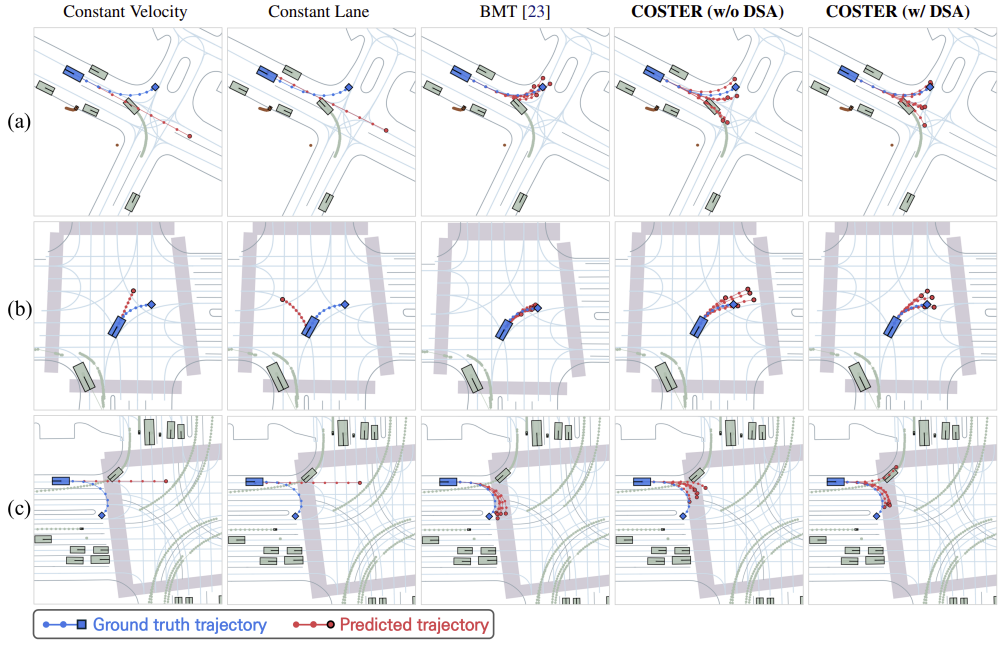
Combined with Dynamic Surrounding Attention (DSA), the CVAE-based time-reversed rollout enables the generation of plausible and diverse trajectory modalities from a collision snapshot.